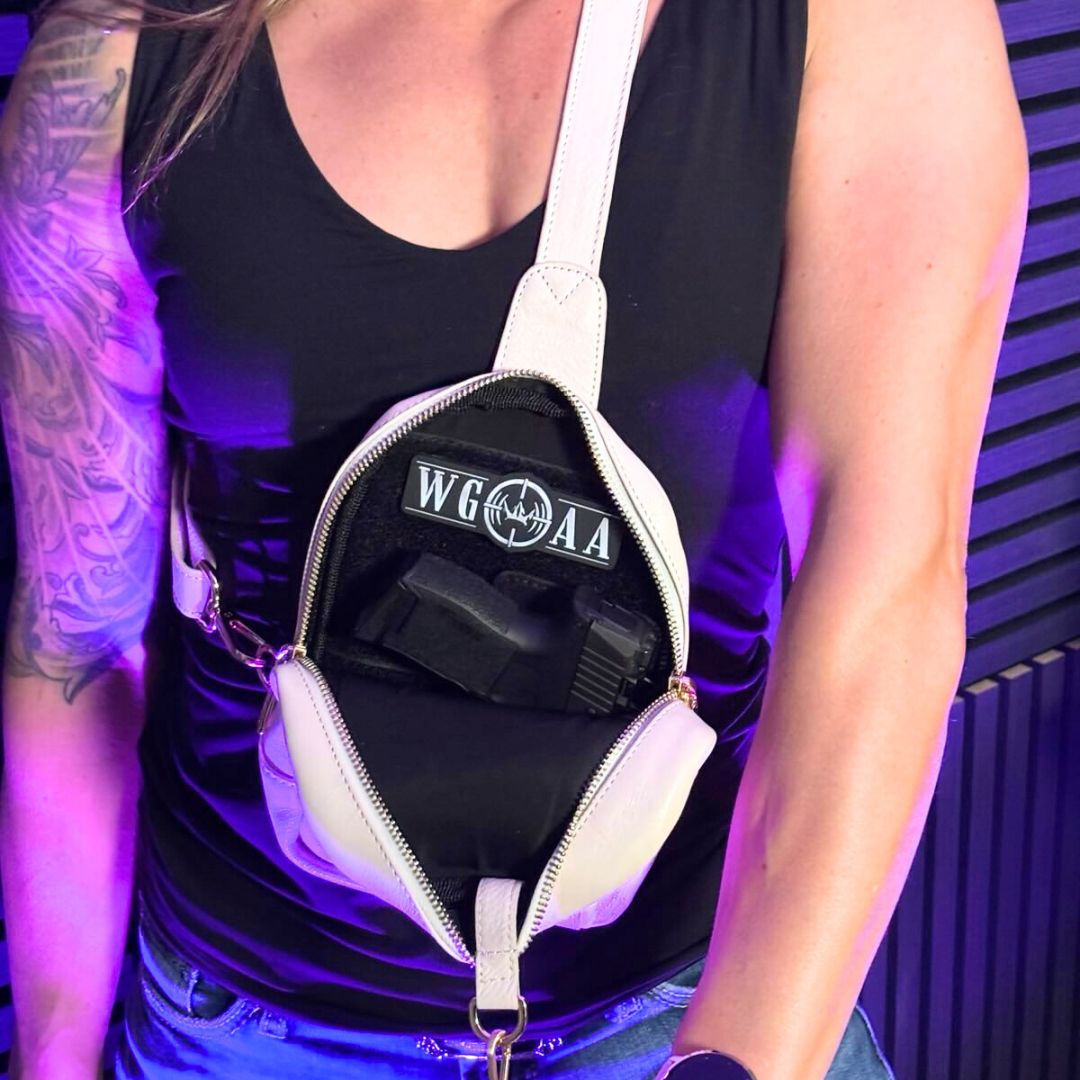
Best Concealed Carry Options for Women:
Concealed Carry Options for Women: Finding the Right Fit
On-Body vs Off-Body Explained
Choosing how to carry is just as important as choosing whether to carry.
For many women, the on-body vs off-body question isn’t theoretical—it’s personal. It’s shaped by lifestyle, clothing, work demands, family responsibilities, and how a woman moves through her day.
There is no universally “right” answer.
There is a right answer for you.
This guide breaks down the real differences between on-body and off-body concealed carry—without posturing, pressure, or one-size-fits-all advice.
First, a Truth That Matters
If you’ve ever felt conflicted about carry options, you’re not alone.
Many women abandon carry altogether because they were told:
-
On-body is the only serious option
-
Off-body is irresponsible
-
If it’s not perfect, it’s pointless
None of that is helpful—and none of it reflects real life.
Consistency beats perfection.
A carry method you actually use will always outperform the “ideal” setup left at home.
Women aren’t carrying the way they used to — and that’s intentional.
Here’s why more women are choosing concealed carry on their own terms.
On-Body Concealed Carry: What It Is and Who It Works For
On-body carry means the firearm stays attached to your body—typically via a holster worn inside or outside the waistband, appendix, hip, back, thigh, or torso.
Why Some Women Prefer On-Body Carry
On-body carry offers:
Immediate access to the firearm
-
Strong retention (the firearm stays with you)
-
Less reliance on external items like bags
-
More predictable draw mechanics with training
For women who wear structured clothing, belts, or consistent outfits, on-body carry can become second nature.
Common On-Body Challenges for Women
Let’s be honest—women’s bodies and wardrobes weren’t designed with holsters in mind.
Common friction points include:
-
Waistbands that don’t support holsters
-
Dresses, skirts, or fitted tops
-
Discomfort when sitting, bending, or driving
-
Printing concerns
-
Body shape variability
- Using the restroom
These challenges don’t mean on-body carry is wrong.
They mean equipment and placement matter more for women.
On-Body Carry Works Best When:
-
Your clothing supports concealment
-
You want maximum retention
-
You’re comfortable adjusting wardrobe choices
-
You train drawing from concealment regularly
Off-Body Concealed Carry: What It Is and Why Women Choose It
Off-body carry means the firearm is carried in an external item—most often a purse, crossbody bag, backpack, or briefcase designed specifically for concealed carry.
Despite the criticism it sometimes gets, off-body carry is widely used by women for one simple reason:

It fits real life.
Why Off-Body Carry Appeals to Women
Off-body carry can offer:
-
Flexibility across outfits
-
Comfort for long days
-
Easier concealment in professional or social settings
-
Accessibility when clothing doesn’t support holsters
For women who rotate outfits, attend formal events, or carry bags anyway, off-body carry can be a practical solution.
The Non-Negotiables of Off-Body Carry
Off-body carry demands discipline.
Key requirements:
-
A bag designed specifically for concealed carry
-
Consistent body positioning (same side, same orientation)
-
Secure retention and trigger coverage
-
Constant control of the bag—no setting it down unattended
Off-body carry is not casual carry.
It’s intentional carry.
Off-Body Carry Works Best When:
-
You already carry a bag consistently
-
Your lifestyle requires outfit flexibility
-
You’re willing to train accessing from a bag
-
You maintain strict control of your carry item
Access, Retention, and Reality
When comparing carry methods, three factors matter most:
1. Access
-
On-body: faster with training
-
Off-body: slightly slower, requires practice
2. Retention
-
On-body: firearm stays with you
-
Off-body: retention depends on bag control and design
3. Consistency
-
On-body: can be abandoned due to discomfort or wardrobe
-
Off-body: often carried more consistently day to day
The “best” method is the one that balances all three for your life.
The Hybrid Reality: Many Women Use Both
Here’s what rarely gets said out loud:
Most experienced women don’t choose one forever.
They adapt.
On-body for:
-
Errands
-
Casual clothing
-
Physical activity
Off-body for:
-
Workdays
-
Travel
-
Dresses or formal events
This isn’t inconsistency.
It’s situational awareness applied to carry.
Training Is What Makes Either Option Viable
No carry method is inherently safe without training.
Women who feel confident carrying—on or off-body—do three things consistently:
-
Practice access and draw mechanics
-
Understand retention risks
-
Rehearse decision-making, not just shooting
Training removes hesitation.
Hesitation is what creates danger—not the carry method itself.
The right setup does more than conceal — it builds confidence.
See how training, repetition, and thoughtful carry choices change everything.
Choosing Without Shame or Pressure
 You don’t owe anyone an explanation for how you carry.
Not the internet.
Not the range.
Not someone else’s rulebook.
Your responsibility is to:
-
Choose a method you’ll actually use
-
Understand the risks and benefits
-
Train with intention
-
Carry with clarity, not guilt
Where WGOAA Comes In
Women Gun Owners Association of America exists to help women make informed decisions—not forced ones.
That includes:
-
Understanding carry options without bias
-
Learning how to train realistically
-
Navigating wardrobe, lifestyle, and safety together
-
Doing all of it in a women-only, judgment-free environment
Preparedness looks different on women—and that’s not a flaw.
It’s reality.
Final Thought: The Best Carry Method Is the One You Trust
Confidence doesn’t come from copying someone else’s setup.
It comes from knowing:
-
Why you chose your method
-
How to access it under stress
-
How to protect it
-
When to act—and when not to
Whether you carry on-body, off-body, or a combination of both, the goal is the same:
Carry with intention.
Train with clarity.
Own your space.
