If your handgun is in a drawer, a bag or a safe, you didn't fail at anything. Most training was built for someone else's hands, someone else's wardrobe and someone else's patience, and then offered to women as it was. Nobody showed you in a way built for you. That's fixable. The order you fix it in matters, and this guide, written by women, for women, puts the steps in that order.
This guide runs the other direction. It starts with you, your hands and your day. It ends with carrying.
Why do so many women own a gun and never carry it?
The usual reason is that she never felt capable with it, and she never found a place to ask the simple questions. She tried the range once or twice, felt watched, and stopped. Or she took a one-day permit class that covered the paperwork and not the handling. Or the training she had just didn't stick.
The room matters as much as the curriculum. One woman who attended a WGOAA webinar put it this way: "I loved that it was for women only which allowed me to ask my questions without feeling stupid, or that I might be judged for asking 'simplistic' questions." (Melva M., 65+, post-webinar survey)
None of that is about strength or age. It's about technique, and technique can be learned at any age.
Step 1: What training should come before I carry?
Before you carry, you should be able to unload, load, rack the slide and make the gun safe without hurrying or asking anyone to hold it. If any of those take several tries, train that first. Calm is a trained skill. It's built the same way grip and trigger control are built, with repetition and nobody watching.
Three things belong in this step:
- Safe handling. Every firearm is treated as loaded, your finger stays off the trigger until you're ready to fire, and the muzzle never points at anything you're not willing to destroy.
- Slide manipulation. Technique, not strength, does the work. If your hands are older or arthritic, a different technique and sometimes a different gun solves it. Our guide to the best guns for women with weak grip or arthritis covers that.
- Practice at home. Dry-fire work with an unloaded, checked gun builds repetitions before you spend a minute on a range. See dry fire training for women for a routine.
If you're starting from the very beginning, Safe Start is WGOAA's beginner handgun course for women. If you want a full path, the Armed Female Academy is eight on-demand courses, every one taught by a woman, with lifetime access, so you can pause and replay as often as you need. Online training doesn't replace hands-on instruction with a qualified instructor. Use it to arrive at the range already comfortable.
To check where you stand, work through Am I Ready to Carry a Gun? before moving on.
Step 2: How do I fit the gun and holster to my body?
Fit means the gun works for your hands and the holster works for your torso, and you test both before you commit. A gun you can't rack, or a holster that digs into your hip, is hard to live with day after day, whatever the reviews say.
Start with the gun, because the holster is built around it. If you already own one, check whether you can operate it comfortably. If you can't, you may need a different model before carry makes sense.
Then choose a carry method that matches your day. Carry Like A Woman™, Hannah Hannah's carry curriculum inside the Academy, is built around this question. Here's how the common options compare.
| Carry method | Works well when | Watch for |
|---|---|---|
| Inside-the-waistband holster | You wear jeans, slacks or a belt most days | Comfort over a full day, and a belt strong enough to hold the weight. See best IWB holster for women |
| Belly band | You wear dresses, leggings or fitted tops with no belt | Positioning on a shorter torso, and how the draw feels. See belly band holster for women |
| Pocket carry with a pocket holster | You wear clothes with real pockets and a small gun | The gun must fit the pocket and the holster must keep the trigger covered. See the Ruger LCP MAX review |
| Purse carry | You want to move the gun between outfits | The gun is only protected while the bag stays on your body. A bag set down on a chair is a bag you've lost control of |
Whatever method you choose, use a holster that covers the trigger guard every time.
Step 3: What do I wear when I carry every day?
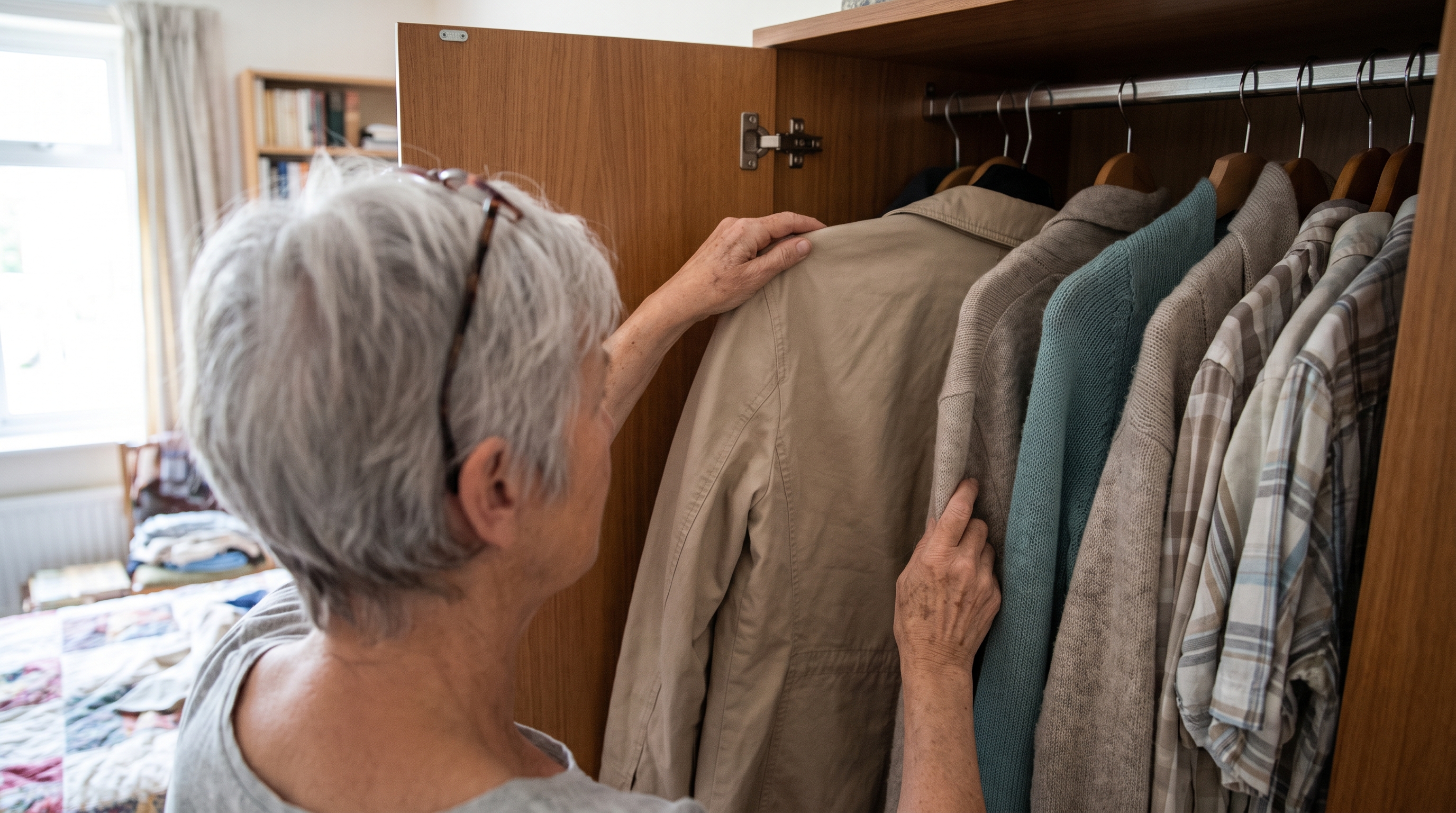
Build the carry setup around the clothes you actually wear, and the gun is more likely to go with you. Fit comes before fashion, and neither has to lose.
Walk through your closet before you buy anything else. Sort what you wear into three piles: most days, church or dinner, and exercise. Each pile may need a different method, and that's normal. Our piece on concealed carry fashion goes through the full approach.
A few practical checks:
- Stand in front of a mirror and sit, bend and reach. If the gun prints or shifts, adjust the holster position or the garment, not your confidence.
- Wear the setup around the house, unloaded, for a few evenings before you carry it loaded anywhere.
- Keep the gun in the same place every day so your hand learns it.
For a step-by-step first month, see Your First 30 Days of Carrying.
Step 4: How do I check my state's carry law?
Check the official source for your state and the states you travel through, and talk to a licensed attorney in your state about your own situation. We can't give legal advice. A blog post, including this one, should never be your last stop on carry law.
A permit also isn't a license to carry everywhere. The Kansas Attorney General's resources page lists a section titled "Other Places Where Concealed Carry May Not Be Allowed," which is the kind of list to look for on your own state's page.
To stay current, do these three things:
- Open your state attorney general's or state police page and read the permit, prohibited-places and travel sections.
- Write down the answers to three questions: where can I not carry, what must I do if an officer stops me, and does my permit work in the next state I drive to.
- Use our CCW Reciprocity Map as a starting point only, and confirm every detail with the destination state's official source.
For the principles behind all this, Lawful Self-Defense, taught by criminal defense attorney Rachel Moss, Esq., is one of the Academy's eight courses.
What does the whole path look like?
The path has four steps in a fixed order, and each one has a finish line you can check yourself.
| Step | What you do | You are done when |
|---|---|---|
| 1. Train | Safe handling, slide work, dry-fire at home | You can load, rack and unload calmly, without anyone watching |
| 2. Fit | Confirm the gun suits your hands, then choose a holster | You can wear the setup for an evening and forget it is there |
| 3. Dress | Match carry method to your real wardrobe | You have a method for each kind of day |
| 4. Check the law | Read your state's official pages, ask an attorney | You can answer where, how and when without guessing |
Skipping a step makes a first month of carry harder, so keep the order.
What mistakes do women make when starting to carry?
The common mistakes are buying equipment before training, choosing a gun for its size alone, and treating a permit as the finish line. Each one has a plain fix.
- Buying the holster first. A holster is built around one gun. Train and confirm fit before you buy.
- Picking the smallest gun. Small guns can be harder to grip and harder to rack. Choose by how it works in your hands, not by how well it hides.
- Carrying loaded before you're ready. If you can't handle the gun calmly at home, spend more time at home.
- Skipping the law check. Prohibited places and travel rules change. Look them up in official sources before each trip.
- Doing it alone. Training with other women helps the skill last. If you can't find a local group, a recorded course and a members' community are a fair substitute.
- Leaning on a forum thread for a legal question. Forums are fine for gear talk. For law, use your state's official pages and a licensed attorney.
FAQ
What is the best concealed carry option for women?
The best option is the one that fits her hands, her torso and her wardrobe and that she will actually wear every day. For most women that is a holster built around a gun she can rack easily, tested over a full day before she carries loaded.
How do most women conceal carry?
Women use inside-the-waistband holsters, belly bands, pocket holsters and purses. The method follows what she wears. A woman in jeans and a belt carries differently than one in a dress or leggings. Many use more than one method across a week.
Can I carry a firearm that belongs to my husband?
Whether you may carry a gun you don't own depends on your state's law. Your own permit covers you as the person carrying, and it doesn't settle that question. Check your state attorney general's official page and ask a licensed attorney in your state first. We can't give legal advice.
Your next step today
Tonight, open your state attorney general's website, find the concealed carry page and write down three answers: where you can't carry, what you must tell an officer, and whether your permit works in the next state you drive to.
WGOAA and the Armed Female Academy provide firearms education for informational purposes only. Training does not guarantee any specific outcome in a defensive situation. Online training is not a substitute for hands-on, in-person instruction with a qualified instructor. Always follow all applicable federal, state, and local firearms laws. WGOAA does not provide legal advice; consult a licensed attorney in your state regarding concealed carry and self-defense law.
Always treat every firearm as if it is loaded, keep your finger off the trigger until you are ready to fire, and never point a firearm at anything you are not willing to destroy.
Student testimonials reflect individual experiences and are not a guarantee of similar results.
State law or reciprocity: confirm current law with official state sources or a licensed attorney before relying on it.