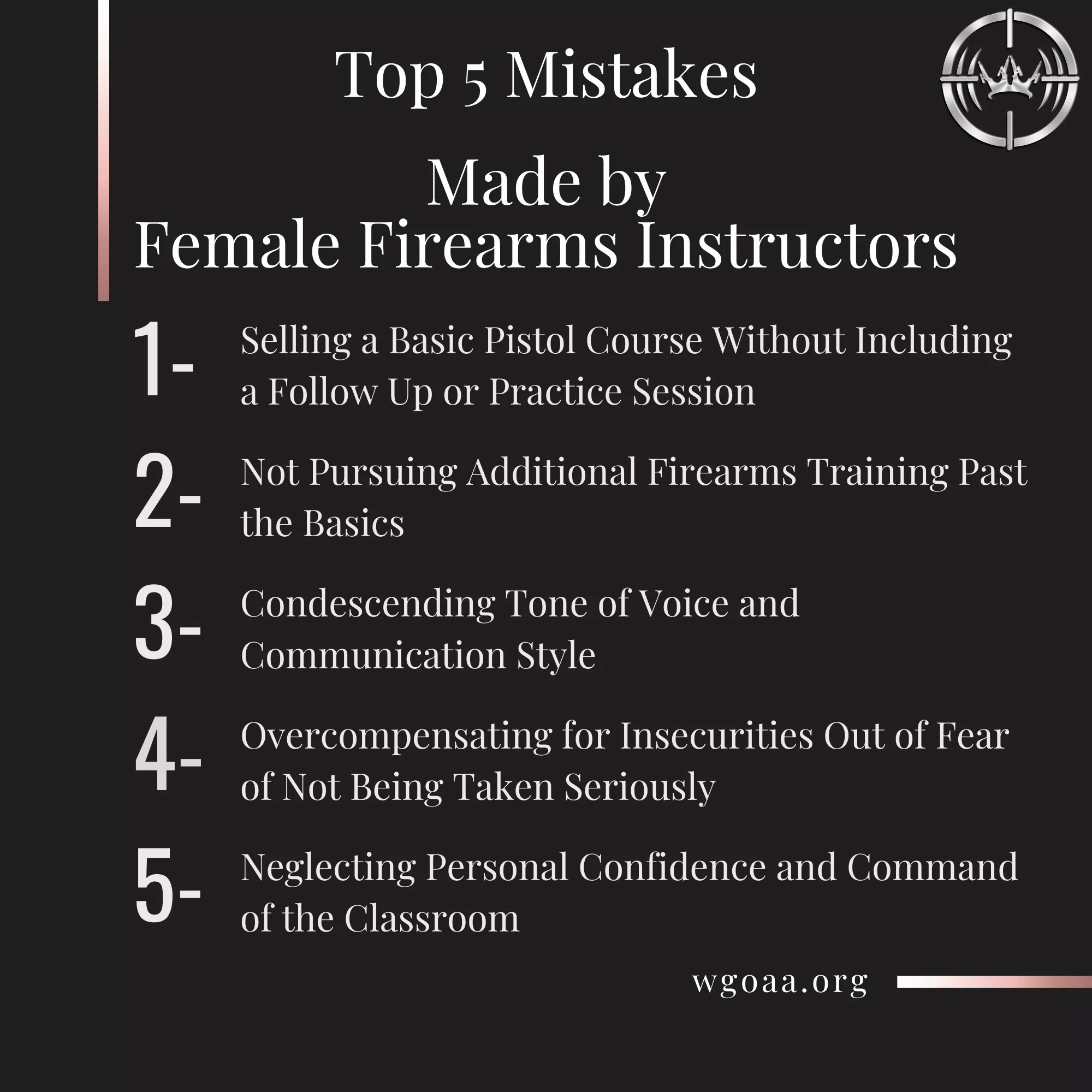
Offering Only Basic Pistol Training
Here’s a tough truth: If you’re only teaching Basic Pistol and expecting that to sustain your business forever, you’re setting yourself up to fall behind. Firearms students—especially women—are sharp, curious, and eager to progress. They’re going to ask about concealed carry laws, defensive shooting techniques, home defense plans, and even long guns. If you’ve stopped training and certifying yourself, you’ll quickly find yourself unprepared to answer their questions or guide them to the next level of confidence and skill.How to Fix It:
- Commit to continuous education: Take courses that expand your knowledge and skillset. At minimum, include:
- State CCW (Concealed Carry Weapons) training
- Defensive Pistol courses to teach practical shooting techniques
- Home Defense for real-world preparedness scenarios
- Beginners Rifle and Shotgun to diversify your offerings and knowledge
- Stop the Bleed or trauma care training to address critical safety situations
- Stay ahead of your students: A well-rounded instructor isn’t just a teacher—they’re a lifelong student. By expanding your training, you’ll not only have answers for your students but also inspire them to advance with you.
-
Skipping Follow-Up Practice or Shooting Clinics
How to Fix It:
- Require Follow-Up Sessions: Build 1-2 practice clinics into your initial Basic Pistol package. This isn’t an upsell (but make sure you price appropriately for your time)—this is about ensuring your students leave confident, competent, and ready to practice on their own.
- Structured Follow-Up: Use these sessions to reinforce safety fundamentals, solidify muscle memory, and troubleshoot any issues she’s having with stance, grip, or accuracy.
- Small Group Clinics: Offer a supportive environment where women can build confidence together and lean on one another for encouragement.
- Charge for Quality: You can (and should) charge more for this extended package—because you’re providing a higher-quality, higher-value service.
-
You’re Just as Condescending as the Men Who Taught You
How to Fix It:
- Check Yourself First: You became an instructor because you knew you could do it better. So do better. Start by asking yourself, “Do I talk to my students the way I wanted to be spoken to when I was learning?”
- Eliminate Finger-Wagging: Watch your body language in class. Are you pointing fingers or scolding women like they’re misbehaving kids? Instead, try coaching: calm tone, patient corrections, and genuine encouragement.
- Cut the Unsolicited Advice: That random stranger at the range didn’t ask for your thoughts on their grip. That woman on Instagram isn’t posting her photo for a free lecture. If you can’t offer help without sounding condescending, don’t offer help at all.
- Replace Condescension with Encouragement: Your job is to build women up, not tear them down. Correct mistakes gently and focus on what they’re doing right before offering constructive feedback. Remember: you’re teaching empowered women, not helpless damsels.
Empower. Don’t diminish. It’s that simple.
-
You’re Overcompensating for Your Own Lack of Firearms Education
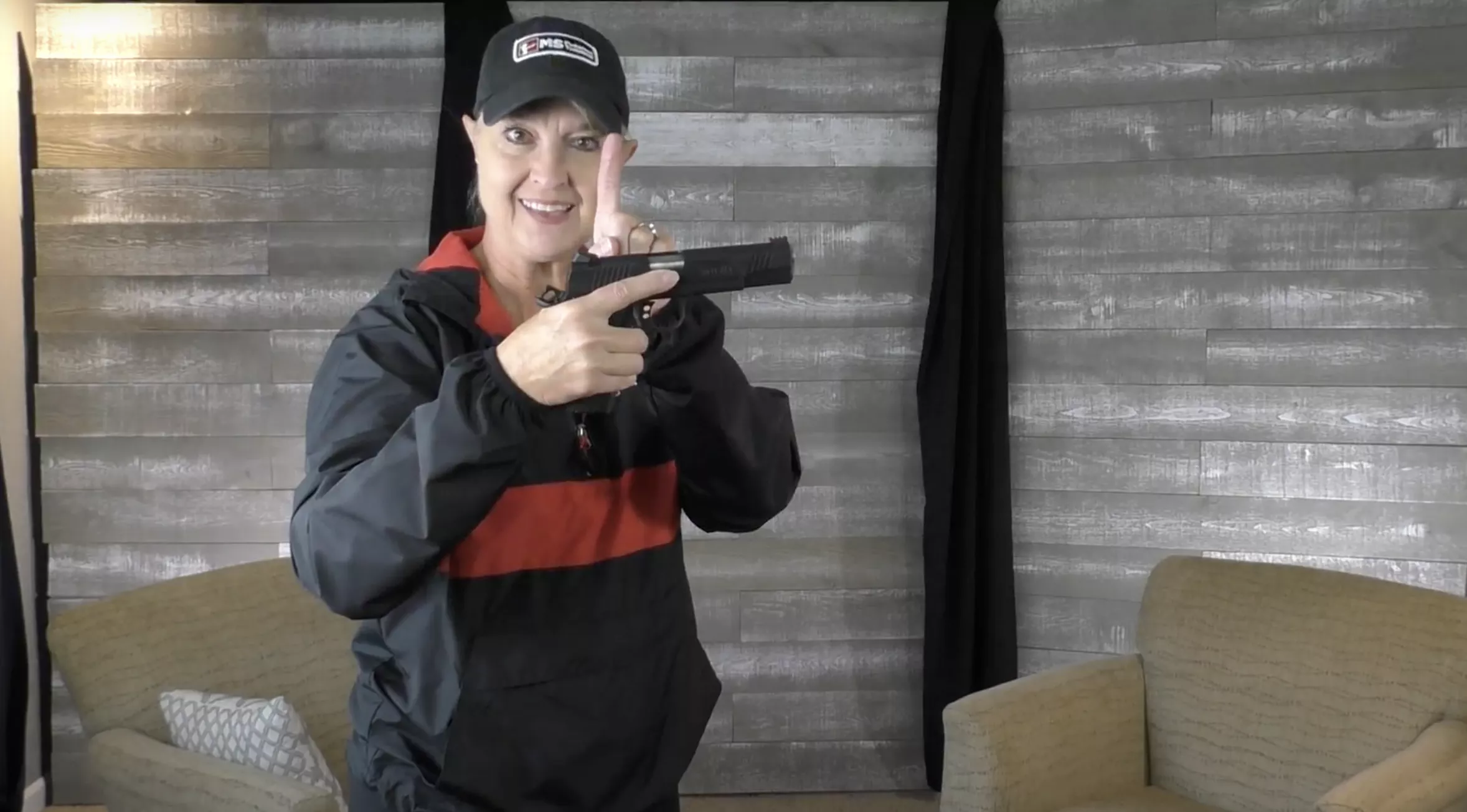 You thought becoming a firearms instructor would be your golden ticket to credibility, that slapping the word “instructor” next to your name would make people take you seriously. And for a while, maybe it worked. But here’s the thing: it’s obvious when you’re in over your head. Whether it’s the hesitation when a sharp student asks a technical question, the vague explanations you scramble to give, or the canned lines you lean on way too hard—it shows.
Why is this a problem? Because you’re undermining your own authority. Students come to you expecting expertise, but when you’re shaky on the fundamentals or can’t answer their questions with confidence, you’ve lost them. Worse, you’re not just hurting your credibility—you’re failing your students. They deserve a knowledgeable instructor who leads by example, not someone faking it and hoping no one notices.
You thought becoming a firearms instructor would be your golden ticket to credibility, that slapping the word “instructor” next to your name would make people take you seriously. And for a while, maybe it worked. But here’s the thing: it’s obvious when you’re in over your head. Whether it’s the hesitation when a sharp student asks a technical question, the vague explanations you scramble to give, or the canned lines you lean on way too hard—it shows.
Why is this a problem? Because you’re undermining your own authority. Students come to you expecting expertise, but when you’re shaky on the fundamentals or can’t answer their questions with confidence, you’ve lost them. Worse, you’re not just hurting your credibility—you’re failing your students. They deserve a knowledgeable instructor who leads by example, not someone faking it and hoping no one notices.
How to Fix It:
- Admit It to Yourself: First step? Own it. You became an instructor too soon, and that’s okay. This isn’t a death sentence—it’s an opportunity. Recognizing where you lack knowledge is the first sign you’re ready to improve.
- Go Back to Being a Student: Being an instructor doesn’t mean you stop learning. Enroll in advanced courses, train under experienced mentors, and push yourself to learn more. At minimum, diversify your skills.
- Stay Humble in Your Teaching: You don’t need to have all the answers immediately. It’s better to say, “That’s a great question—let me find the most accurate answer for you” than to blurt out something wrong. A confident instructor can admit they’re still learning.
-
Neglecting Personal Confidence and Command of the Classroom
- Project Your Voice Like You Mean It: Speak up. Your voice should hit every corner of that classroom or range. This isn’t a dinner party—this is leadership. If you have a soft voice, practice speaking louder and with authority without shouting. Bonus: confidence in your voice builds confidence in your students. If you believe in what you’re saying, so will they.
- Avoid “Fuddy Duddy Syndrome”: Nobody wants to listen to a monotone lecture that drags on like a sad audiobook. Keep your energy up. Vary your tone to emphasize key points, and don’t be afraid to crack a smile or inject some personality where it fits. You’re not a robot—act like a real person. If your students wanted bland, they’d read a manual instead.
- Organize and Trim the Fat: Rambling is the enemy of engagement. Create a lesson plan, know what you’re going to say, say it, and move on. Structure your lessons with clear, easy-to-follow sections:
- What are we doing today? (Set expectations)
- Why is it important? (Make it matter)
- How do we do it? (Teach it cleanly and clearly)
- Do it. (Practical application)
- If you feel yourself spiraling into tangents or droning, catch yourself and refocus. Nobody leaves your class smarter if you spent 15 minutes storytelling about that one time at the range.
- Own the Space: Whether it’s a classroom, range, or parking lot, your presence should be strong. Stand where you’re visible, maintain solid posture, and avoid pacing nervously. Use deliberate movement—walk the line while giving feedback, look students in the eye, and command the space like you were born to be there. If you look like you belong, your students will believe it too.
- Lead with Conviction: Be clear and intentional from the moment class starts. Start strong: introduce yourself, set expectations, and explain why you’re the expert they can trust. There’s no room for “Well, I think…” or “Maybe we’ll try this.” No—lead with confidence: “This is the agenda. Here’s what we’re going to do, and here’s why it matters.”
- Confidence Is Contagious: Here’s the thing: if you act unsure of yourself, your students will doubt you and themselves. If you exude confidence, they’ll borrow from your energy, trust what you’re teaching, and feel empowered to improve.